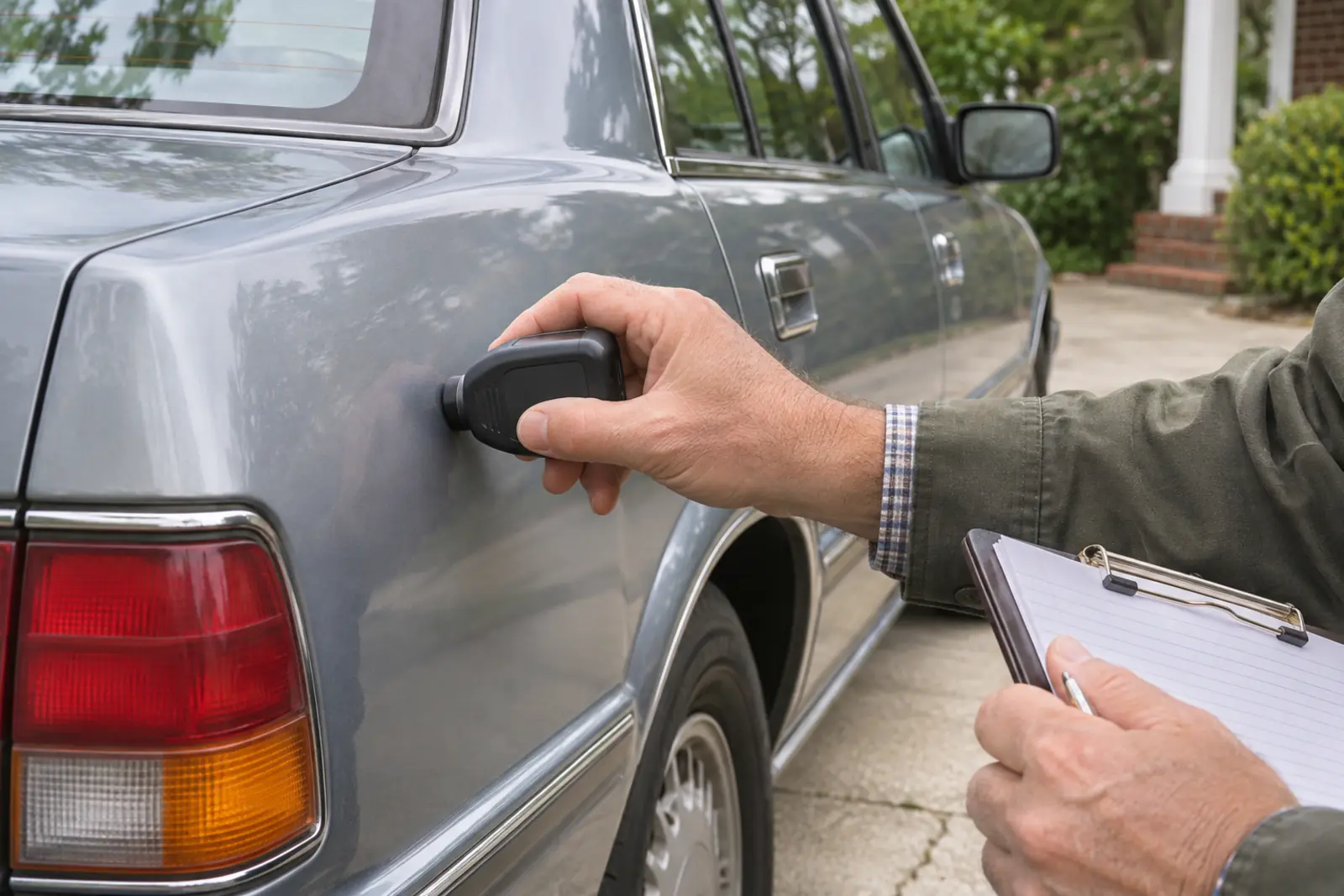
To get a fair trade-in value, find out what your car is worth before you visit a dealer, get at least two or three written offers, negotiate the trade-in separately from the price of the car you are buying, and know what you still owe on any loan. In Alabama, trading in at a dealer also reduces the sales tax on your next car, because tax is charged only on the difference between the price and the trade-in allowance. That tax saving is part of the trade-in's real value when you compare it with selling privately.
Know your number before the appraisal
Dealers appraise trade-ins every day. You should arrive with your own research:
- Pricing guides. Kelley Blue Book and Edmunds give trade-in and private-party ranges. The Federal Trade Commission suggests checking these sources before you negotiate.
- Instant online offers. Several national car-buying services give a cash offer based on your VIN, mileage and condition. Even if you do not sell to them, the offer is a useful floor and a negotiating reference.
- Local listings. Look at comparable cars for sale in the region, keeping in mind that asking prices on a dealer lot include reconditioning and profit.
Be honest about condition when using these tools. A car described as excellent online but appraised as fair at the lot will produce a disappointing gap, and that gap is not the dealer cheating you.
Trade-in value, private-party value and retail price
| Value | What it means | Who pays it |
|---|---|---|
| Trade-in value | What a dealer will credit you, allowing for reconditioning, risk and resale margin | A dealer, as part of a purchase |
| Instant cash offer | A firm or conditional offer to buy outright, often after an inspection | Dealers and online buyers |
| Private-party value | What an individual buyer might pay you | Another driver |
| Retail price | What a dealer asks for the same car after reconditioning | The dealer's next customer |
Trade-in value is almost always the lowest of these. You are paying for convenience: no listings, no strangers test-driving your car, no title paperwork with a buyer, and an immediate credit toward your purchase.
The Alabama trade-in sales tax credit
Alabama's state automotive sales tax rate is 2 percent. The Alabama Department of Revenue's guidance for dealers says that when a used vehicle is taken in trade, tax is charged on the net difference between the purchase price and the trade-in allowance. The credit has no dollar cap: the full trade-in allowance is deducted before tax is calculated, no matter how large it is.
The credit applies only when the trade-in is part of the same dealer transaction. Selling your old car privately—even on the same day—eliminates the credit, and your next purchase is taxed on its full price. Manufacturer rebates do not receive the same treatment: Alabama taxes the full pre-rebate price regardless of any factory discount applied.
If you buy an $18,000 car and receive $6,000 for your trade, the state's 2 percent applies to $12,000, saving $120 in state tax, and local tax drops by the same proportion. A full worked example with Talladega County rates is in Alabama car sales tax, title and tag fees.
So when you compare offers, add the tax saving to the dealer's trade-in figure. If a private buyer would pay $6,800 and a dealer offers $6,000, the true gap is smaller than $800 once tax is counted, and you avoid the work of a private sale. Whether the remaining gap is worth the effort is your call; buying or selling a car privately in Alabama explains what a private sale involves.
Negotiate the two deals separately
The FTC recommends negotiating the price of the car you are buying before you bring up the trade-in. When both are discussed together, a generous-looking trade-in allowance can be offset by a higher price on the new car, or the reverse. A clean approach:
- Agree on the out-the-door price of the car you are buying, in writing.
- Then ask what the dealer will give you for your trade.
- Compare that offer with the written offers you already have.
- If it is low, show the competing offer or sell the car elsewhere.
If you still owe money on the car
Get the exact payoff amount from your lender, which may differ from the balance on your statement. If the trade-in is worth more than the payoff, the difference is positive equity and reduces what you borrow. If it is worth less, you have negative equity. About 30.5 percent of car buyers who had a trade-in owed more than their vehicle was worth, according to a JD Power forecast cited by CNBC in March 2026; the average shortfall was $7,214 in the fourth quarter of 2025—an all-time high, according to Edmunds data in the same report.
Dealers often roll negative equity into the new loan, which means you pay interest on debt from a car you no longer own. The FTC warns that this can leave you owing more than the new car is worth. If that is your situation, consider paying the gap in cash, keeping your current car longer, or choosing a cheaper replacement. See how to calculate a car payment and total loan cost to understand how rolled-over debt changes what you will pay over time. Check the new contract to confirm the dealer actually pays off the old loan.
Simple ways to raise the offer
- Clean it thoroughly. A clean interior and engine bay suggest a well-kept car.
- Bring both keys and the manual. Missing keys can cost money to replace, and dealers deduct for it.
- Bring service records. Proof of regular oil changes and major work supports a higher appraisal. Before the appointment, go through a used car inspection checklist so you know the same points an appraiser will examine.
- Fix cheap problems. A burned-out bulb or a missing gas cap is easy to fix. Major repairs rarely return their cost on a trade.
- Know about open recalls. Check the NHTSA recall lookup at nhtsa.gov/recalls; recall repairs are free at franchise dealers for the brand.
- Do not hide known problems. Appraisers usually find them, and misrepresenting a car can create legal trouble later.
Paperwork for a trade-in
- Your title, if you own the car outright, or the lender's details and account number if you do not.
- Your registration and a photo ID.
- All keys and remotes.
- Remove your license plate. In Alabama the plate belongs to you, not the car, and may be transferable to your next vehicle; see how to title and register a car in Talladega County.
Frequently Asked Questions
Why is my trade-in offer lower than the online value?
Online tools give ranges based on the condition you report. A dealer adds reconditioning costs, market demand and resale margin, and its appraisal of condition may differ from yours.
Does trading in a car save on sales tax in Alabama?
Yes. When a dealer takes a vehicle in trade, Alabama charges its 2 percent state automotive sales tax only on the net difference between the purchase price and the trade-in allowance. The credit has no dollar cap, and local taxes are also reduced by the same proportion.
Will I get the Alabama tax credit if I sell my car privately first?
No. The credit requires the old vehicle to be traded in as part of the same dealer transaction. Selling your car privately—even on the same day you buy the replacement—means your new purchase is taxed on its full price. Using the private-sale proceeds as a separate down payment does not qualify.
Should I mention my trade-in at the start?
The FTC suggests settling the price of the car you are buying first and then negotiating the trade-in separately, so each number can be judged on its own.
Can I trade in a car I still owe money on?
Yes. The dealer pays off your loan and credits or charges the difference. If you owe more than the car is worth, that negative equity may be added to your new loan.
Is it better to sell privately or trade in?
A private sale often brings a higher price, but a trade-in is faster and, in Alabama, lowers the sales tax on your next car. Compare the offers after counting the tax saving.